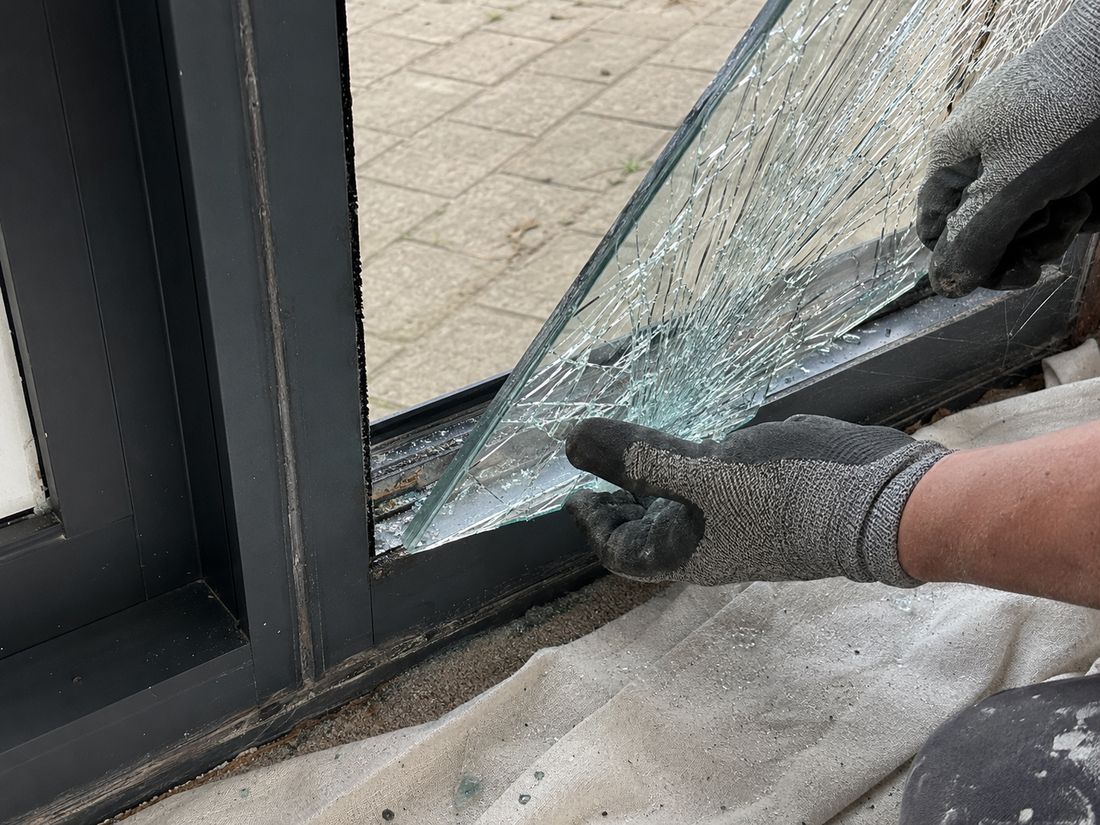
Broken and cracked glass replacement
Smashed, cracked or chipped panes measured, cut and fitted. Standard sizes in plain glass are usually back in within 24 to 48 hours. Toughened and laminated are made to order.
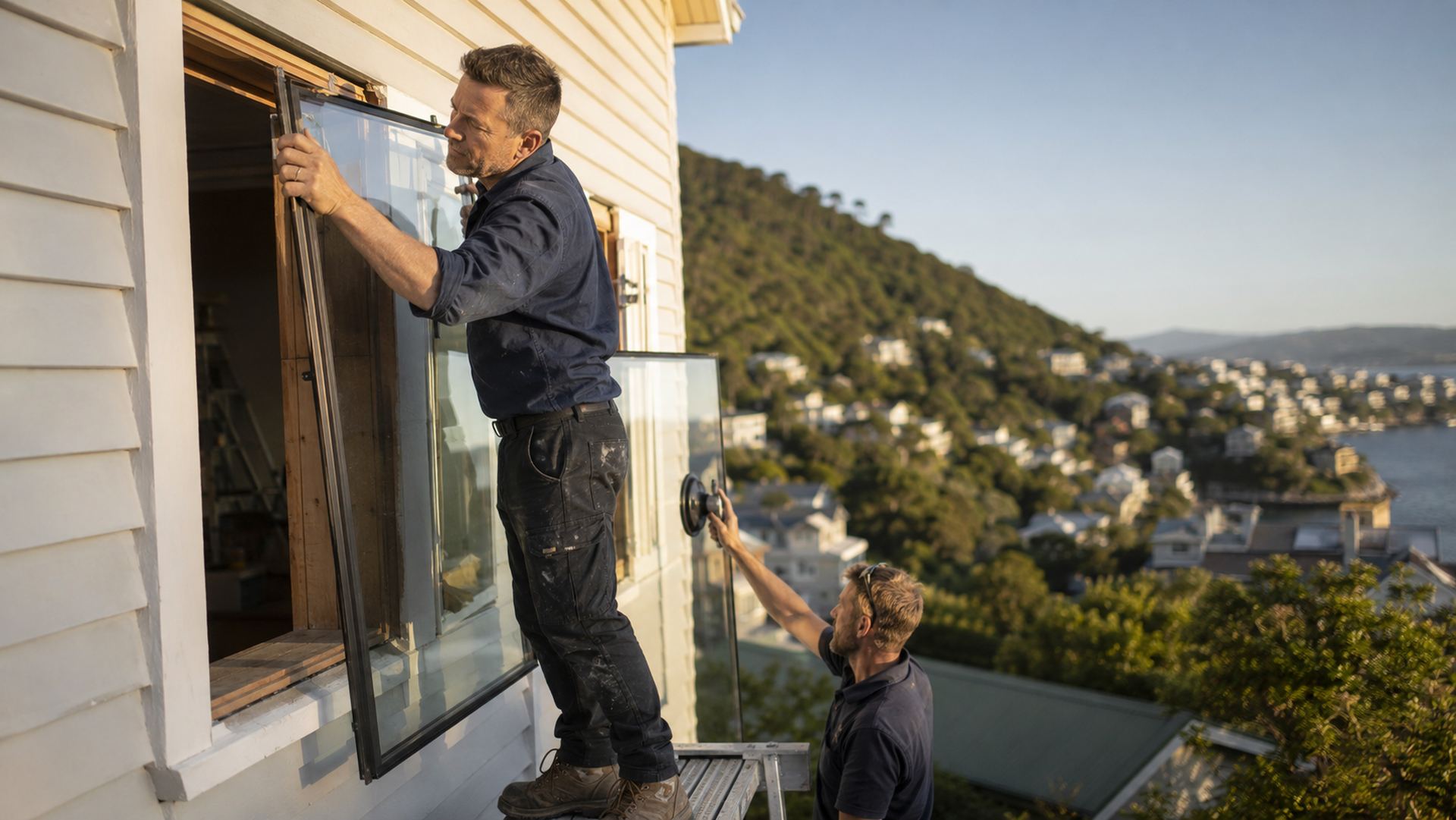
Window and Glass Repair Wellington handles window repair, window replacement and window installation across the whole city, for homes, rentals and commercial buildings. We replace broken and cracked glass, swap failed double glazed units, restore timber sash windows, repair aluminium joinery and hardware, retrofit double glazing into existing frames, and install new windows and ranch sliders. Emergency board ups run 24 hours a day, seven days a week.
Four quick questions. Most quotes come back the same day.
Six things that decide whether a repair lasts twenty years or comes back next winter.
Wellington City Council maps wind zones from Low through to Specific Design. We check yours before ordering, because an Extra High site needs thicker glass and closer fixings than a sheltered street does.
Most windows we are called to do not need replacing. Stays, rollers, rubbers and drainage account for the majority of faults. You get both prices on the same quote.
Break in, storm damage or a smashed shopfront, we clear the glass, secure the opening and measure for permanent glass on the same visit.
From Island Bay round to Seatoun and along the Petone foreshore we fit 316 stainless as standard, because ordinary stays and catches pit within a few years in salt air.
Doors, wet areas and low level glazing get toughened or laminated glass whether or not the original did. A lot of older Wellington homes have plain glass in positions that would fail today.
Villa and bungalow sashes are old growth rimu and matai. We scarf in new timber where it has gone soft and keep the rest of a hundred year old window.
Most of what fails on a window is not the glass. These are the calls we take most often.
Smashed, cracked or chipped panes measured, cut and fitted. Standard sizes in plain glass are usually back in within 24 to 48 hours. Toughened and laminated are made to order.

A 24 hour callout for break ins, storm damage and smashed shopfronts. We clear the glass, board or temporarily glaze the opening, and measure at the same visit.
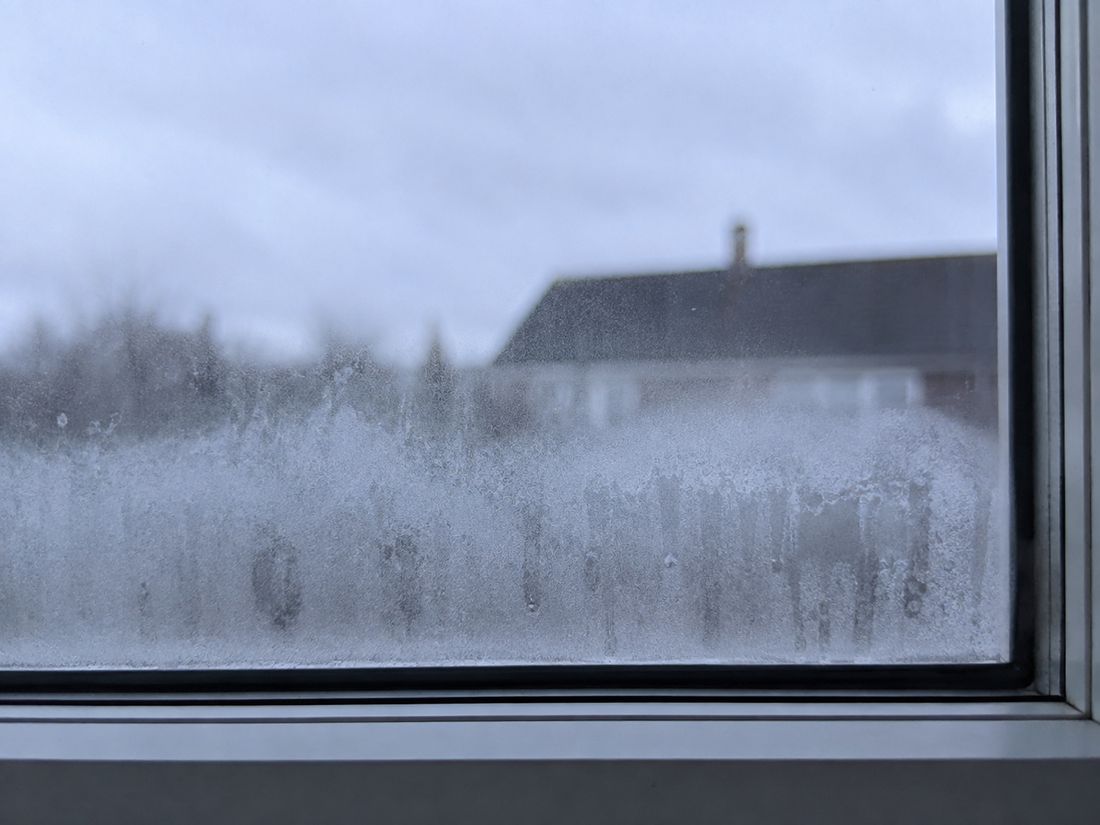
A permanent haze between the panes means the edge seal has failed. The sealed unit is replaced, usually within a week, and your frame and sash stay put.
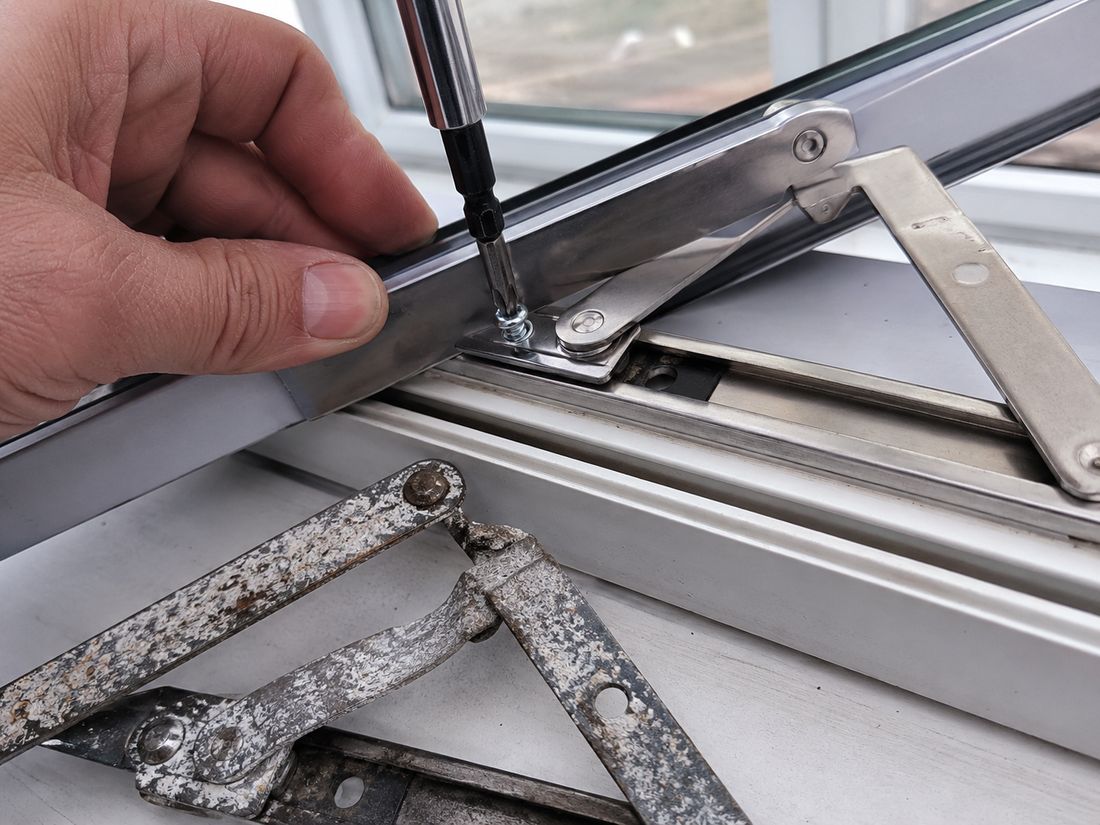
Friction stays, hinges, handles, catches and restrictors. A sash that will not stay open or no longer locks is almost always hardware instead of the window itself.
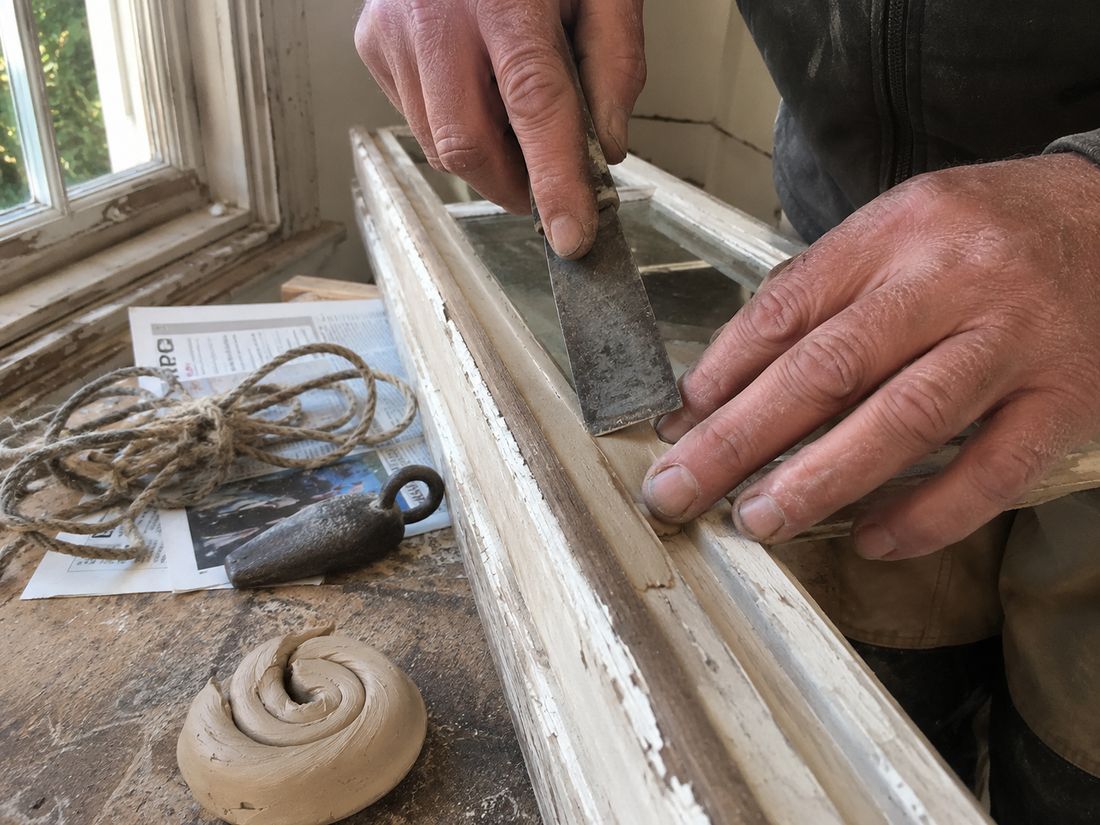
Snapped sash cords, painted shut sashes, rotten sills and perished putty on villa and bungalow joinery. Repaired in place or on the bench, keeping the original glass.
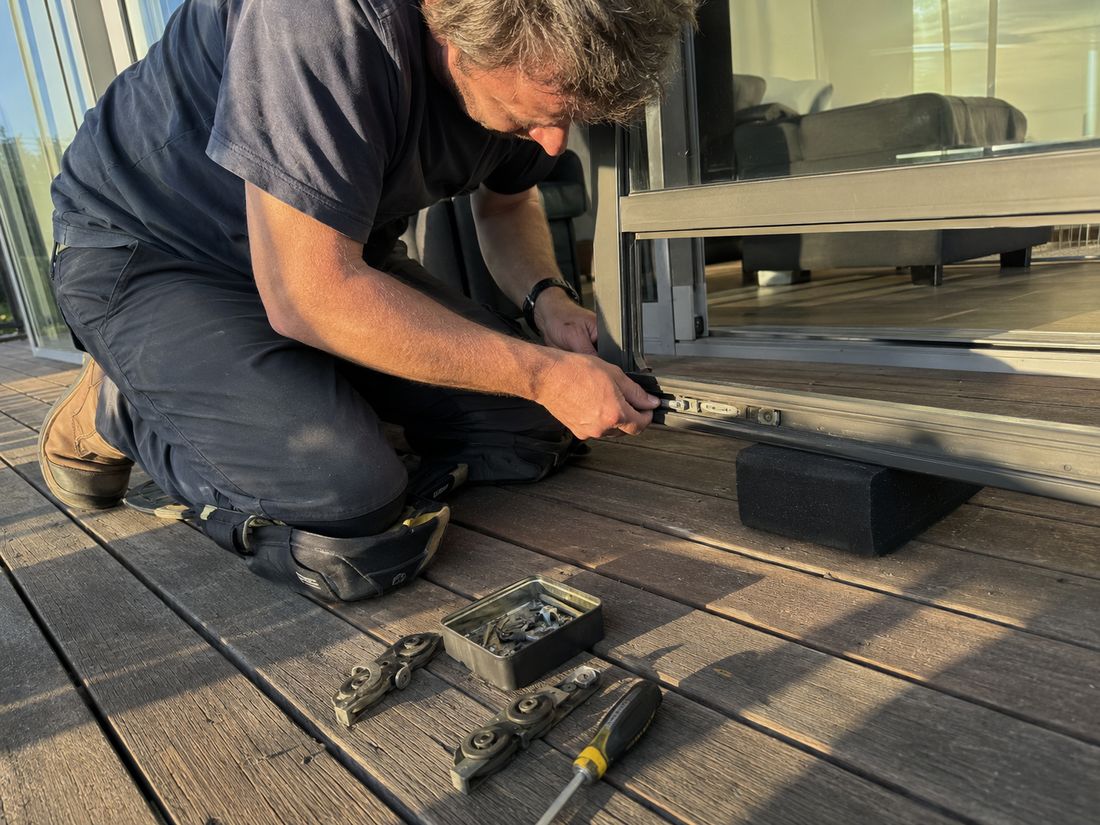
Doors and sashes that stick, grind, jump the track or will not latch. Rollers, tracks, guides and locks, usually sorted in a single visit.
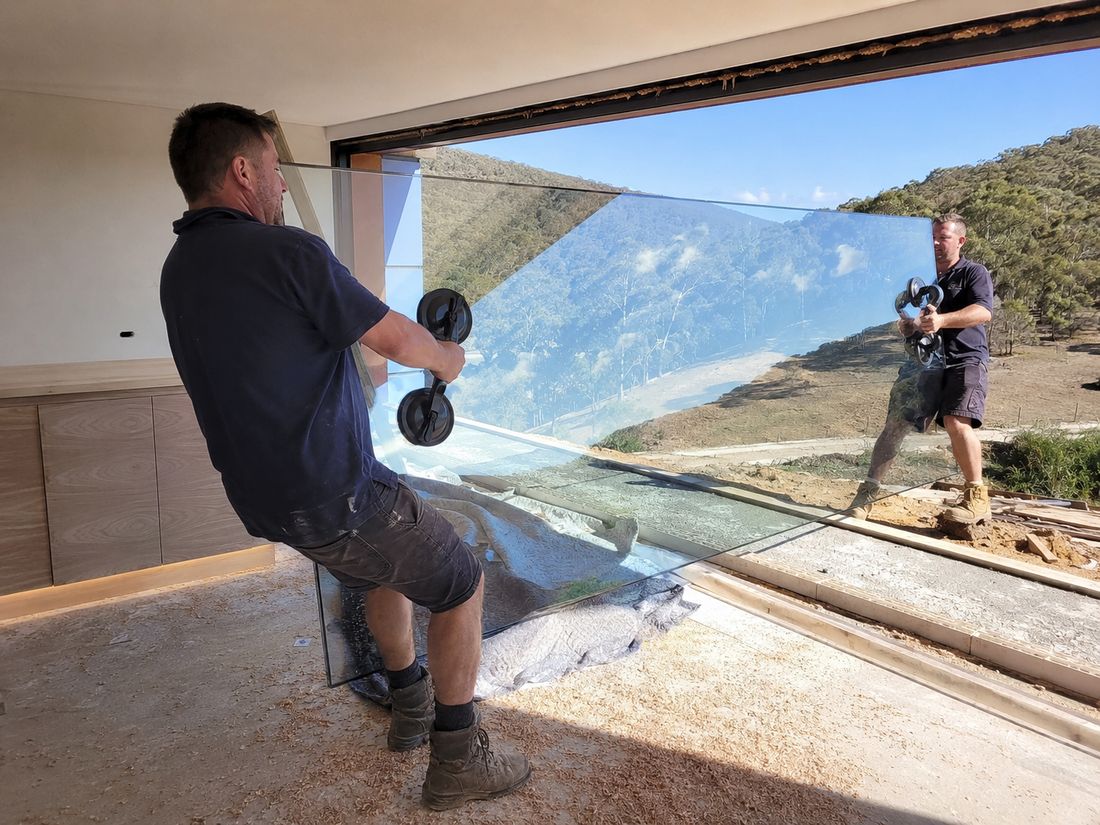
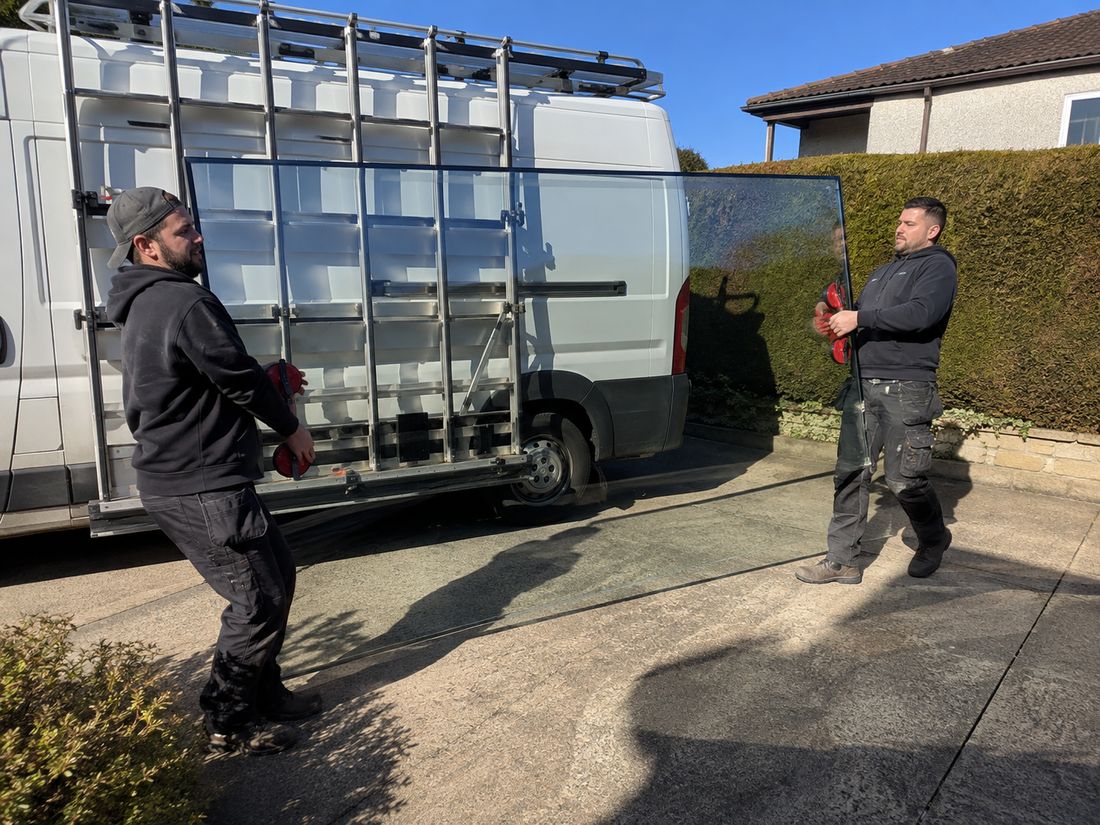
Big fixed panes, ranch slider panels and picture windows, handled with suction gear and specified for wind load and not size alone.
Re rubbering, corroded corner joints, chalking powder coat and blocked drainage slots on aluminium frames from the 1970s onward.
Most of what fails on a window is not the glass. It is the hardware that moves, the rubber that perishes, the drainage that blocks and the timber that holds water. All four are cheaper to fix than to replace, and all four get misdiagnosed constantly.
A window that will not hold open has a worn friction stay in nearly every case. The stay is the hinged steel arm that carries the sash and gives it enough friction to stay where you put it. Once the pivots corrode the arm twists instead of folding, and the sash drops, swings or fouls the frame.
A sash that catches at one corner has dropped rather than warped. New hardware and a rehang closes the gap, and it usually fixes the lock at the same time, because a latch that misses its keeper is almost always a sash height problem rather than a broken lock. Within reach of the water at Island Bay, Lyall Bay, Seatoun and the Petone foreshore we fit 316 marine grade stainless, because ordinary stays pit within a few years in salt air.
The glazing wedge holds the glass and the weather seal is what the sash compresses against when you close it. Rubber hardens, shrinks and takes a permanent set, and once that has happened there is a continuous air path around the sash even with the handle locked down. That is the whistle you hear.
Re rubbering pulls the old gasket out and rolls new in, usually without removing the glass. On timber double hung windows we rout a groove and fit brush pile seal to the meeting rail and stiles instead, which closes the gap without changing anything you can see and stops the rattle as well. With gusts over 60 km/h on roughly 173 days a year, it is the cheapest thing on this website and the one people notice first.
Timber joinery rots from the bottom up because the sill holds water while the head sheds it. Paint holds a shell over wood that has already gone soft, so the damage is usually twice the size it looks. We probe the whole sill before quoting so the price does not move once the window is open.
The repair is a scarf, not a filler. Soft timber is cut back to solid wood and a new piece is let in, glued, pinned, shaped to the original profile and primed. With thousands of villas and bungalows still carrying their original single glazed sashes in this city, that matters: the timber in those sashes is denser than anything a yard sells today, and the rest of the frame usually has decades left.
A wet internal sill has four common causes and only one of them is the seal. Blocked drainage slots back water up over the frame. A failed head flashing lets water in above the window and it appears at the bottom. Perished wedge lets it past the glass. A racked sash leaves a gap at one corner.
We water test in stages from the sill upwards until the leak shows itself. Running silicone around the outside of a frame without knowing why it leaks is the most common bad repair we are called out to undo, because it seals the drainage path and traps the water inside the wall.
Glass is not one product. Annealed, toughened, laminated and sealed double glazed units all behave differently, cost differently and take different lead times, and NZS 4223 decides which of them is legal in which position. Getting that right before anything is ordered is most of the job.
Common sizes in ordinary annealed glass are cut from stock, which is why they are usually measured and glazed inside 24 to 48 hours. A standard pane runs about $250 to $600 supplied and fitted and a large one $600 to $1,200.
Toughened and laminated glass is a different story. It is manufactured to the finished size and cannot be trimmed afterwards, so allow several days and expect us to measure carefully rather than quickly. Where the opening cannot be left to the weather we board it on the first visit and glaze once the glass arrives.
A permanent haze between two panes means the edge seal of that unit has failed and damp air is now inside the cavity. Both misted faces are sealed in where no cloth can reach them, which is why cleaning never works, and over time the trapped moisture etches white mineral streaking into the glass.
The sealed unit is replaced, generally $350 to $800 for a standard size, and your frame, sash and hardware all stay exactly where they are. We clear and test the drainage while we are there, because standing water in the rebate is the usual reason a unit failed early rather than at twenty years.
NZS 4223 sets out the positions where Grade A safety glass has to be used: in doors and the panels beside them, in bathrooms and other wet areas, in low level glazing somebody could walk into, and in large panes. Overhead glazing and balustrades go further and need laminated rather than toughened.
A lot of older housing here predates those rules, so plain annealed glass sits in positions that would not be permitted today. Replacing a broken pane is the cheapest chance you will ever get to bring it up to standard, so we point it out rather than quietly putting the same thing back.
Commercial frontages are a walk into position, so they go back toughened or laminated, and on a frontage that has been hit before laminated is worth the difference because it holds together instead of dropping out in one go.
Splashbacks and shower panels are toughened and made to order with every cut out done before treatment, which is why templating them properly matters more than anything else in the job. Mirrors get safety backing in bathrooms and gyms and mechanical fixings rather than adhesive alone once they pass a certain size.
There are four ways to deal with a window that is past repairing, and they cost very different amounts. Which one suits you comes down to the condition of the frame rather than the age of the house, and our quote puts the options side by side so you can see the gap.
Glass only replacement keeps your frame and swaps the pane, starting around $250. Insert replacement drops a new unit into the existing frame or reveal, leaving the cladding and the flashings untouched. Full joinery replacement takes the whole thing out, disturbs the cladding and costs several times more.
The mistake people make is assuming a tired looking window needs the third option. If the extrusion is straight and the corner joints are tight, or the timber is sound above the sill, it does not.
The option almost nobody is offered sits between repair and replacement. When a sash is genuinely past saving but the box frame around it is sound, a new sash is made to the original profile and hung in the opening you already have. The frame, the architraves, the linings and the cladding are never touched.
It costs a fraction of new joinery, it can be built with a deeper rebate so it takes a sealed unit from the start, and nobody on the street can tell it happened.
Wellington City Council maps wind zones from Low through to Specific Design, and windows are rated against those pressures under NZS 4211. On a ridge site that changes the glass thickness, the fixings and the flashing detail.
That applies to consented work rather than to repairs on an existing home, and knowing which side of the line your job sits on changes the quote considerably. Like for like replacement in an existing house is exempt under Schedule 1 of the Building Act, so no consent and no council fees.
Nearly every leaking window we get called to was fitted badly rather than made badly. Water enters at the head because the flashing was cut short or a bead of sealant was run where a hook and hem was needed. Air moves through because the perimeter gap was packed with offcuts and never sealed.
So we quote the flashing, the packers, the air seal, the fixing centres and the making good afterwards. Leaving those off a quote is how a number gets to look cheap, and it is why the cheapest install is so often the one we come back to.
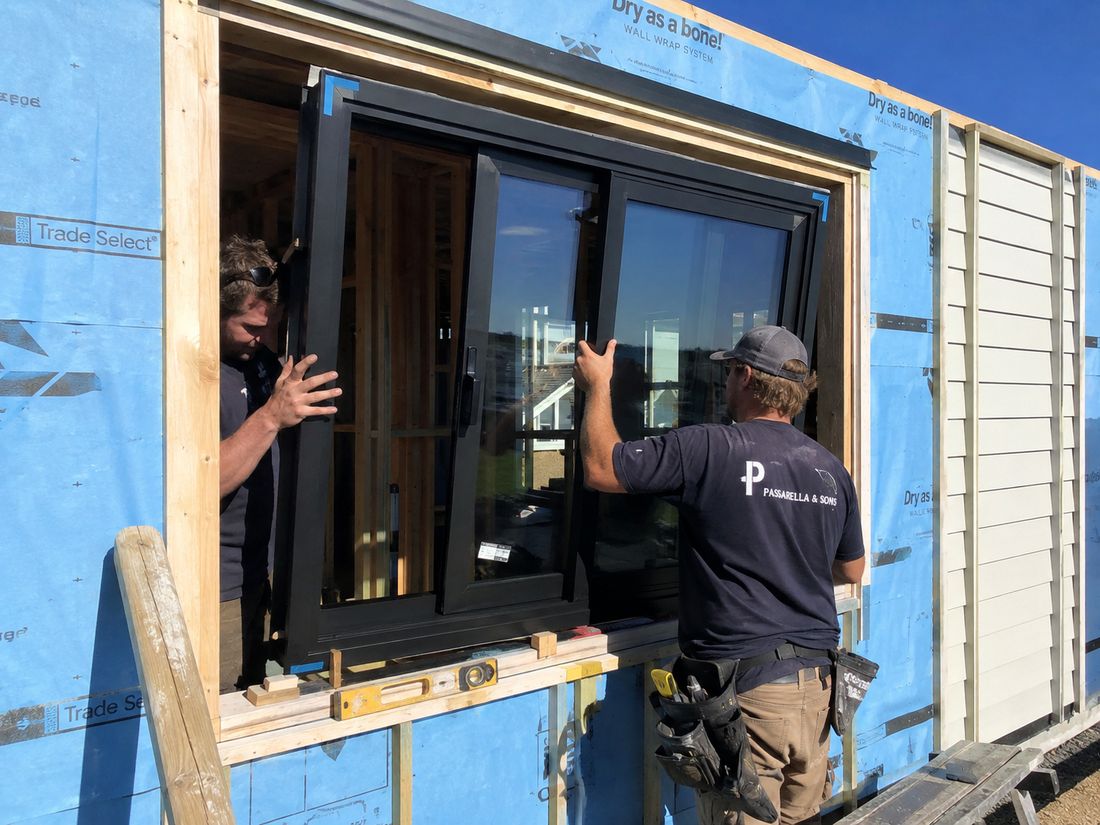
Retrofitting suits this city better than most, because so much of the housing stock is character timber nobody wants to lose. We machine the rebate in the sash you already have, drop in a sealed unit and rebead it, so the window looks unchanged from the footpath and the room stops being cold.
The sash comes out, the rebate is machined deeper or a new bead is made, a sealed unit goes in and the bead is refitted and painted. On a whole house we take the sashes back to the bench, do any timber repairs, glaze, repaint and refit, which gives a far better finish than working in place.
Weight is the part people forget. A double glazed sash is roughly twice the weight of the single glazed one it replaces, so cast iron weights get changed or added to and cords are upgraded. Skipping that is how a beautifully retrofitted window drops out of balance six months later.
Aluminium frames retrofit for about $550 to $850 a window and timber for about $800 to $1,250, with a standard family home landing around $10,000 to $18,000.
Two things move the number more than the glass does. Access, because a house lot of sealed units carried up forty steps is real labour that a flat section does not involve. And whether the timber under the paint is sound, which we probe before quoting rather than discovering on the day.
A Low E coating is a microscopically thin metallic layer on an internal glass face that reflects heat back into the room instead of letting it radiate out. You cannot see it, it does not change the view, and it typically adds around a third to the glass price.
Argon fill improves it again. Laminated glass on the outer pane with unequal pane thicknesses is what actually cuts noise, and it is a different specification to a standard unit. The time to add any of these is while a unit is being made anyway, because then you only pay the difference.
It fixes water on the glass. It does not warm an aluminium frame, so plenty of people retrofit, solve the condensation on the pane and then find water forming on the frames instead. Only a thermally broken frame solves that half.
Wind driven rain arrives at pressure here, so a window can be dry for years and then leak in one particular southerly. We check for that at the measure and say so, because selling glass that cannot solve the problem in front of it is how a customer ends up disappointed with work that was done perfectly well.
Break in overnight, a southerly through a bedroom window, a shopfront put through on a Saturday. The first job is a building that is closed up and safe, not a perfect repair by Tuesday, and those are two different visits.
We ask three things: where you are, what has broken, and whether anybody is at risk from the glass. Loose glass hanging in a frame above a footpath or a doorway gets dealt with before anything else.
Then we clear the broken glass, cut back whatever is still held in the rebate, and either board the opening with plywood or fit temporary glazing where the look matters. We measure at the same visit so the permanent glass is ordered straight away rather than waiting on a second trip.
Plywood screwed over an opening is faster and stronger than waiting on glass, and for a retail frontage temporary glazing means the shop can trade the next morning instead of looking closed.
If entry came through a single glazed pane in a vulnerable position, laminated glass on the replacement is worth considering. It cracks but holds together, so getting through it is slow and loud rather than a single quiet hit.
A broken window in a rental is a maintenance obligation with a clock on it. We can deal directly with a property manager, arrange access, board up without anybody being home and invoice against the property rather than chasing a tenant.
Every window we touch is listed by address and room on the invoice, and we photograph the damage and record the glass type and thickness. That is exactly what an insurer asks for, and providing it up front is what stops a claim stalling.
In the central city and the exposed hill suburbs a lot of the frontage sits in older buildings with glazing set into original openings. Boarding those takes more care than a modern aluminium shopfront, because nothing should end up fixed into the stonework or the decorative surround.
We board back to the timber or steel behind the opening, pack rather than drill, and work early, late or at weekends where a business cannot afford to close during trading hours.
Real 2026 ranges, GST inclusive. Every quote we write is fixed after the measure, not an estimate that moves later.
| Job | Typical price | Notes |
|---|---|---|
| Single pane glass replacement, standard size | $250 to $600 | Measured and fitted, common sizes in 24 to 48 hours |
| Single pane glass replacement, large pane | $600 to $1,200 | Two person lift and suction handling |
| Failed double glazed unit | $350 to $800 | Up to about $1,200 for oversized panels |
| Retrofit double glazing, aluminium frame | $550 to $850 a window | Existing frames retained |
| Retrofit double glazing, timber frame | $800 to $1,250 a window | Rebate machined and rebeaded |
| Full joinery replacement, aluminium | $1,500 to $2,500 an opening | More for thermally broken |
| Whole home retrofit, 12 to 15 windows | $10,000 to $25,000 | Glass spec, access and wind zone move the number |
| Hardware repairs: stays, handles, rollers | From well under $200 | Usually the same visit |
Three things move a Wellington price more than anything else. Access, because a house lot of units carried up forty steps in Hataitai is real labour that a flat Tawa section does not involve. Wind zone, because exposed ridge sites need thicker glass and closer fixings under NZS 4211. And whether the frame is sound, because glass only work starts around $250 while full joinery starts around $1,500.
Four things wreck windows in this city. Which one is happening to your house decides what we fit.
Wellington averages 173 days a year with gusts over 60 km/h, and Stats NZ records the highest annual average daily maximum gust in the country here at around 65 km/h. The Mount Kaukau gauge above Khandallah hit 202 km/h in the June 2013 storm. What that does to a window is rarely dramatic. It catches a sash left on the latch, overloads the friction stay, and the sash swings through the frame. So when we replace glass we replace the hardware that let it happen, and on exposed sites we fit a restrictor stay as well.
From Island Bay round the south coast to Seatoun, out through Miramar, and along the Petone and Titahi Bay foreshores, salt reaches the joinery. The frame usually survives it. The stays, catches, hinges and screws do not, because they are smaller, they move, and their coating is thinner. Coastal joinery needs washing every three months and not every six, with mild detergent and fresh water only. We fit 316 marine grade stainless within reach of the water, which costs a little more and lasts several times longer.
Thousands of Wellington homes still have their original joinery. Victorian and Edwardian villas through Thorndon, Mount Victoria, Aro Valley and Newtown. Californian bungalows in Miramar, Kilbirnie, Island Bay and the Hutt Valley. Workers cottages in Petone, Ngaio and Berhampore. All of it built from old growth rimu, matai and totara that you cannot buy today. Rot concentrates in the sill and bottom rail while everything above is sound, so scarfing in new timber costs a fraction of new joinery and keeps the window.
Condensation is warm moist air meeting a surface below its dew point, and in most Wellington homes the coldest surface is single glazed glass or a bare aluminium frame. Retrofitting double glazing fixes the water on the glass. It does not warm the frame, so plenty of people retrofit and then find water on the aluminium, which only thermally broken joinery solves. And if every window in the house is wet, the moisture load is the real problem and no amount of glass will fix it on its own.
All of Wellington city, plus the Hutt Valley, Porirua and Tawa. Pick your suburb from the Location menu at the top of the page for local detail, or call and ask if it is not listed.
Rang at 8am with a smashed bedroom window. Boarded within the hour, new glass in two days. No fuss, no waiting around for a callback.
Southerly took out a big pane on the deck side. They came out the same afternoon, measured, and put in thicker toughened glass because of the wind up here. Explained it all without being condescending.
Our villa sashes had not opened properly in about fifteen years. Cords replaced, sashes eased, putty redone and repainted. They look original and they actually work now. Worth every cent.
Salt had wrecked the stays on the seaward side. Swapped for marine grade, and while he was here he showed me how to wash the frames so it does not happen again. Small job, treated like a big one.
A standard single pane runs about $250 to $600 supplied and fitted, and a large pane $600 to $1,200. A failed double glazed unit is generally $350 to $800. Hardware repairs like stays, handles and rollers cost far less again. Full joinery replacement sits around $1,500 to $2,500 an opening.
Common sizes in standard glass are usually measured and glazed within 24 to 48 hours. Toughened, laminated and sealed double glazed units are made to order, so allow several days to a week. If the opening cannot be left we board it up the same day.
Yes, 24 hours a day across Wellington, the Hutt Valley and Porirua. We clear the glass, board or temporarily glaze the opening, and measure for the permanent glass on the same visit.
The seal around the edge of the unit has failed and moisture is now inside the cavity. Both misted surfaces are sealed in, so cleaning cannot reach them. The sealed unit is replaced and your frame and sash stay exactly as they are.
Not for like for like replacement in an existing home, which is exempt under Schedule 1 of the Building Act. You do need consent if the opening is enlarged or structure is altered. Consented new residential work has to be double glazed under the 2021 H1 changes.
Aluminium frames retrofit for about $550 to $850 a window and timber for about $800 to $1,250. A small home with 5 to 10 windows commonly lands between $6,000 and $10,000, and a standard family home with 10 to 20 windows around $10,000 to $18,000.
Yes. The rebate in the existing sash is machined deeper and a bead matched to the original profile is fitted, so the window looks unchanged from the street. We check the timber first and repair any soft sills before glazing.
Warm moist room air is meeting a cold surface. If the water is on the glass, double glazing fixes most of it. If the glass is dry and the aluminium frame is wet, the frame is the cold bridge and only thermally broken joinery fixes that. If everything is wet in every room, the moisture load in the house is the real problem.
Each habitable room needs openable windows, doors or skylights totalling at least 5 percent of the floor area, and each must open to the outside and be able to be fixed open. Kitchens and bathrooms also need extractor fans ducted outside. All private rentals have had to comply since 1 July 2025.
Almost always the friction stay. The arm has corroded, lost its friction or been bent in a gust. Replacement stays are stocked in common sizes and the swap takes minutes per window. On exposed sites we fit a restrictor at the same time.
Yes. Door and slider glazing is a safety position under NZS 4223, so it goes back as toughened or laminated glass. It is made to order, so allow several days, with temporary glazing in the meantime if the panel cannot be left.
All of Wellington city from Tawa and Johnsonville through the central suburbs to Island Bay, Miramar and the eastern bays, plus Lower Hutt, Petone, Upper Hutt and Porirua.
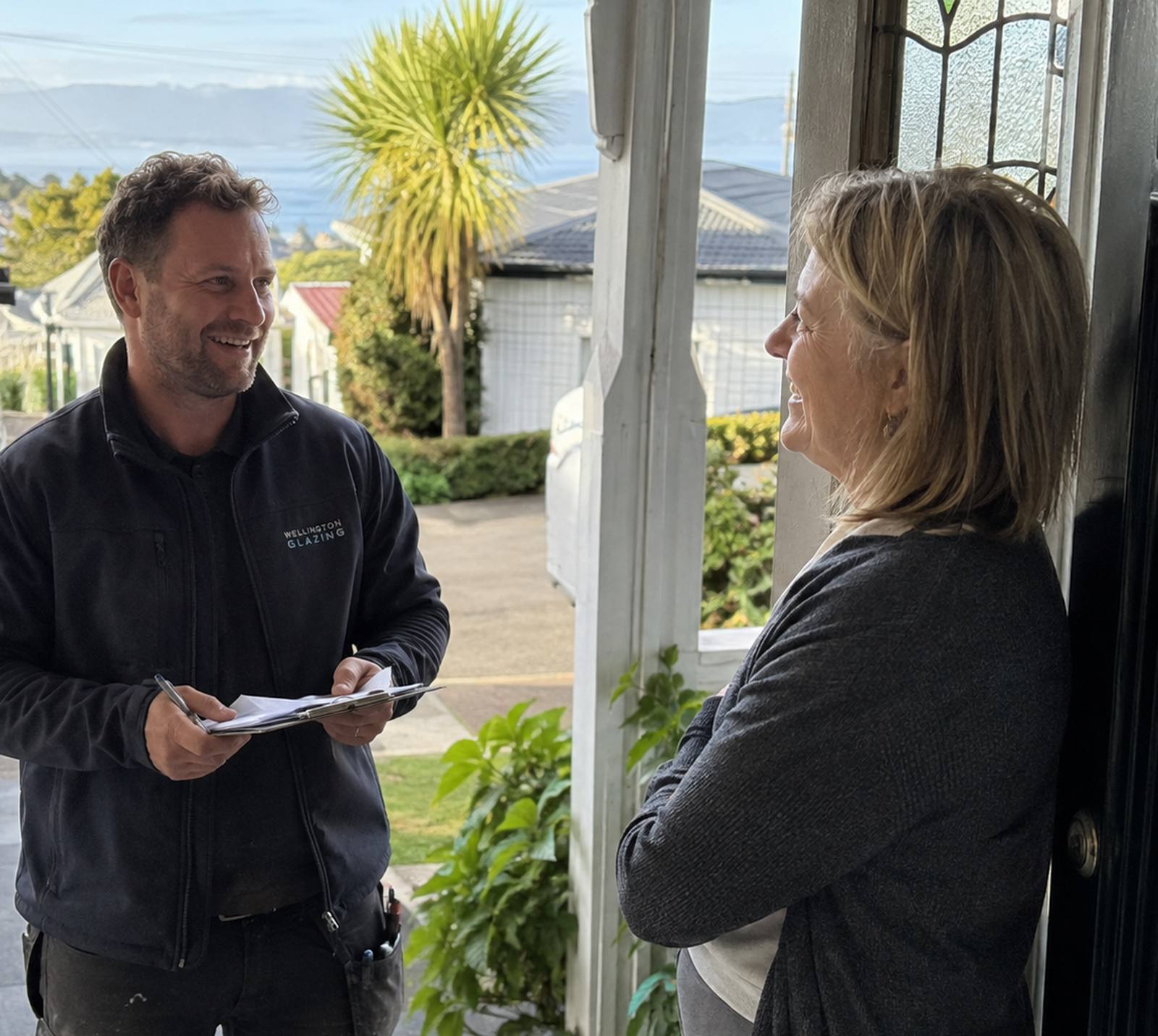
Tell us what has happened and we will give you a real number. Free measure, no obligation, and an honest answer about whether it needs repairing or replacing.
Four questions and you are done.